
How Wedding Video Works During Irish Ceremonies: Catholic, Civil and Humanist Weddings
What can actually be filmed during your wedding ceremony in Ireland? A practical guide to Catholic, civil and humanist ceremonies, from an Irish wedding videographer.
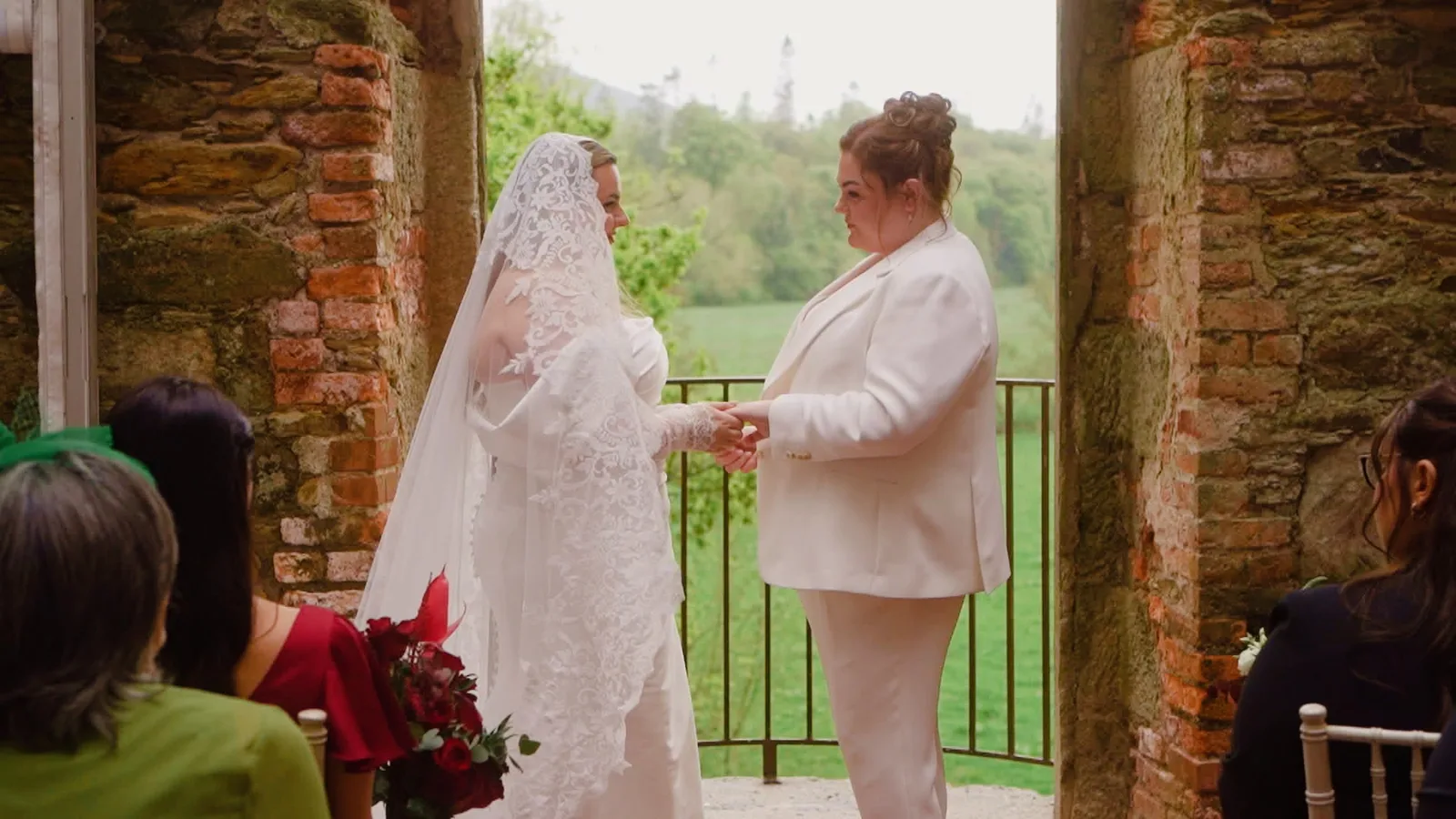
It may not surprise you to know that many people assume the ceremony is the one part of the day a videographer just points a camera at. In reality though, it's actually the part with the most variation and the most etiquette, and it's the part I tend to plan ahead the most for.
Your ceremony can almost always be filmed in Ireland, whether it's a Catholic church wedding, a civil ceremony or a humanist one. What changes is the detail: where I can stand, whether I can record clear audio at the top of the room, and which moments a particular priest, registrar or venue would rather I kept a respectful distance from. A good videographer sorts all of that out quietly in the weeks before, so on the day you just get married.
I've filmed ceremonies across Ireland for well over a decade, in churches, hotels, country houses and gardens. Here's how it actually works, and what's worth knowing before the day.
What's true at every Irish wedding: ask first
Whatever kind of ceremony you're having, one thing doesn't change: the person conducting it is in charge of the room, and filming happens with their blessing, not around them. Before every wedding I make a point of introducing myself to the celebrant and letting them know I'll be respectful and unobtrusive throughout. It has never once let me down, and it's a big part of why a ceremony film comes out both lovely and calm.
That's also why I can't tell you in a blog post exactly what will be allowed at your ceremony. Two churches ten miles apart can have different rules. What I can tell you is what each kind of ceremony usually involves, and what's worth checking.
Catholic church ceremonies
A Catholic wedding is usually the longest and most structured of the three, often a full nuptial Mass, and there's plenty in it worth having on film: the processional, the vows and rings, the readings, often a live singer or musicians, and the recessional at the end.
Priests vary more than couples expect. Most that I meet are relaxed and used to having a videographer present. Some ask that cameras stay in one position, usually to the side or the back, and that there's no moving around once the ceremony is under way. The odd one prefers no camera close to the altar. None of that stops you getting a beautiful ceremony film. It just shapes where I work from, which is exactly why I settle it with the priest beforehand rather than finding out on the morning.
Two practical things worth knowing. Churches can be dim, so a videographer who works with the available light rather than dragging in lighting rigs will keep the ceremony feeling like a ceremony. I don't use lights at the ceremony. And microphone rules and acoustics differ from church to church, which matters for sound, more on that shortly.
Civil ceremonies
A civil ceremony is led by a civil registrar and tends to be shorter and more contained, often held in a hotel or an approved venue room rather than a church. Filming is usually straightforward, but registrars have their own preferences, and the one thing worth checking in particular is the signing of the register. Some are perfectly happy for it to be filmed up close; others prefer a little room around the legal part.
Because a civil ceremony is often in the same building as the reception, the space can be tighter and the light more mixed than a church. That's a positioning question more than a problem. It's also worth remembering the registrar works to a schedule, so a videographer who's set up and ready before you walk in keeps everything relaxed.
Humanist ceremonies
Humanist ceremonies are usually the most flexible of the three. They're led by a trained celebrant, they're heavily personalised, and they're often held outdoors or in a room chosen for its setting rather than for tradition. That freedom films beautifully: personal vows, a hand-fasting or another ritual the couple has chosen, readings from friends, and a real sense of the two people rather than a fixed script.
The flip side of outdoors is weather, and wind in particular. Wind is a sound problem more than a picture problem, so for an outdoor ceremony I plan around it. Celebrants tend to be very open to filming, but as with everything else, I check rather than assume.
How a discreet videographer works once the ceremony begins
Whatever the ceremony, the way I film it is the same: quietly, from a planned position, moving as little as possible once it's under way.
Where I film from. The ceremony is the part of the day where a videographer is most obvious if they get it wrong. I work out my positions in advance, usually from the side or the back, where I can see faces without ever being between you and your guests. On very rare occasions, ceremony spaces can be super tight on space and that can sometimes leave the videographer restricted in terms of getting good angles.
Staying still. Once you're up there, movement draws the eye, and the last thing you want is a video crew wandering the aisle. So I try and settle into position and stay put through the parts that matter, the vows above all. If a priest or registrar has asked for no movement, that isn't a limitation to me, it's simply the plan.
Capturing the sound. The ceremony is the part of the film where audio matters most, and where phones and camera microphones fail hardest. Vows said quietly at the top of a big church do not reach a camera at the back. Recording that sound cleanly and discreetly, within whatever the venue allows, is a big part of the job. It's genuinely one of the questions worth asking before you book: how does the videographer record the vows and readings?
The moments a ceremony film is built around
You don't need to plan your ceremony around the camera, but it helps to know the moments a film tends to hold onto: the processional as you come in, the vows and the exchange of rings, the readings, any live music or singing, the signing, and the recessional back down the aisle together at the end. These are the beats that, years later, people are most glad to have. If your ceremony has something personal in it, a particular ritual, a song that means something, a reading from someone who matters, tell your videographer in advance so they're ready and in the right place for it.
What to ask before the day
Most of this you can leave to your videographer, but a few questions to your celebrant or venue smooth everything out:
- Is filming allowed, and are there any restrictions on where the videographer can stand?
- Can ceremony audio be recorded, for example a small microphone near the lectern or the celebrant?
- Are there any moments they'd prefer not to have filmed up close?
- For a civil ceremony: is the registrar happy for the signing of the register to be filmed?
- For your venue: are there any house rules for the ceremony space?
And if you'd rather not have these conversations yourself, that's completely normal. Tell your videographer. In my case, I'll handle the liaising with the celebrant or the sacristan for you.
What you don't need to worry about
Here's the reassuring part. You don't need to understand microphones, camera positions, church rules or timings. That's the videographer's job, and a good one will have quietly sorted it before you arrive. You don't need to perform for the ceremony, look at the camera, or do anything twice. And you don't need the day to feel like a production. A ceremony filmed well should feel, to you and your guests, like a ceremony that happened to be filmed.
If you're the kind of couple who dreads the idea of cameras, that's exactly the point, and it's worth reading how a discreet approach works across the whole day. For where the ceremony sits in the rest of my coverage, from the morning through to the first dances, see how I work on the day.
Common questions
Can you film inside a Catholic church? Almost always, yes. The priest may set where I can stand or ask for no movement during parts of the ceremony, and I confirm those details with the church in advance so there are no surprises on the day.
Will we actually hear the vows and readings clearly on the film? That's the aim, and it comes down to how the videographer records audio rather than the camera itself. Clear ceremony sound is the part most worth asking about before you book.
What about an outdoor humanist ceremony? Lovely to film, and often the most personal of the three. The main thing to plan for is wind, which affects the sound more than the picture.
Do we have to ask the priest or registrar about filming ourselves? You can, but you don't have to. Tell me the details of your ceremony and I'll take care of that side of it.
If you're planning your ceremony
If you'd like to talk through how your ceremony would be filmed, whether it's a church, a hotel room or a garden, check your wedding date and ask away.