
Questions to Ask a Wedding Videographer Before Booking in Ireland
Skip the 30-question checklists. The nine questions that actually separate wedding videographers in Ireland, and what good answers sound like.
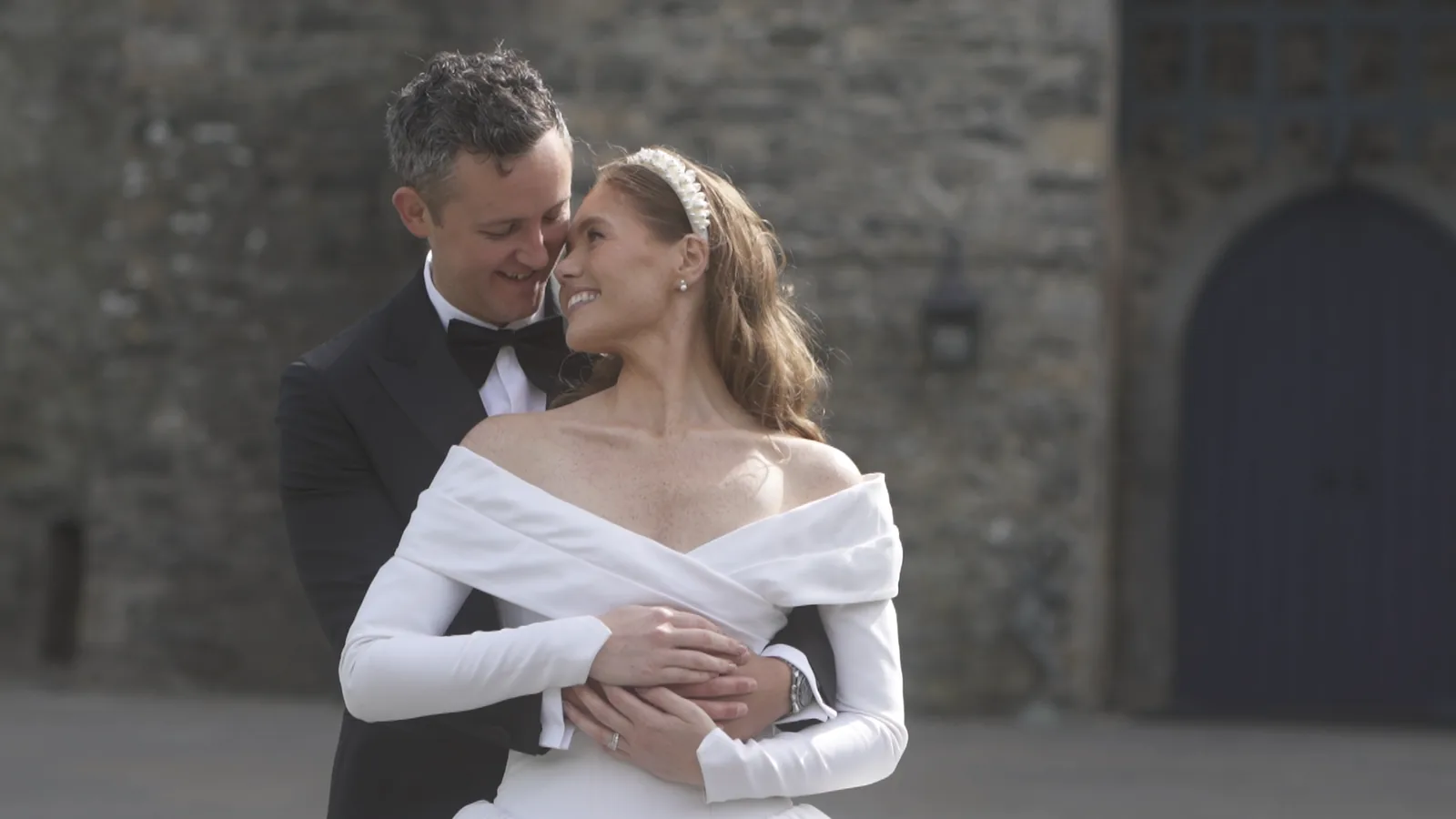
Most "questions to ask your wedding videographer" checklists are thirty items long and often give the impression they've been written by someone who's never been at a wedding! You don't need thirty questions. You need about nine, asked properly, and you need to know what a good answer sounds like, because the difference between videographers isn't in whether they answer these. It's in how.
I've been filming weddings across Ireland for well over a decade, so I'll declare the bias up front: these are also the questions I'd want to be asked, and I've noted what the answers tell you either way. For transparency, my own answers to most of them live on how I work on the day and wedding video prices.
1. Can we watch a full wedding film, not just highlights?
The single most useful question, and the one most couples never ask. Highlight reels are three minutes of anyone's best work cut to music; they all look decent. A full film shows you the things that matter: how the ceremony is covered, whether the speeches are watchable, whether guests look relaxed or directed, how the boring-but-vital bits are handled.
A good answer is simply "yes, I'll send you one." Hesitation here is the clearest red flag in the whole process. If someone sells a full documentary film but can only show highlights, you're being asked to buy the main product unseen.
2. How do you record the vows and the speeches?
Audio is the biggest quality gap between videographers and the hardest one to see in a portfolio, because you're usually watching highlights with music over everything. Your vows and speeches are the parts of the film you'll care most about in twenty years, and a camera microphone at the back of a church does not capture them.
You're listening for specifics: dedicated audio recorders, microphones on or near the speakers, a plan for the band and the ceremony musicians. If the answer is vague, the audio will be too. Ask to hear speeches in a full film (question 1 covers this too).
3. Who exactly will be filming our wedding?
In Ireland, plenty of videographers (like myself) are sole operators, and plenty of larger outfits book the date first and assign a freelancer later. Neither model is wrong, but you should know which you're buying, because the films you watched may not have been shot by the person who turns up.
If it's one person: ask what happens if they're sick (a good solo operator has a network arrangement and will say so honestly, and it's super rare for it to be needed). If it's a team or studio: ask to see full films shot by the specific person who'd cover your date, and get that person named in the booking.
4. How many of you will there be, and how do you actually behave on the day?
Some videographers work alone with compact kit; some bring a second shooter, lighting, and more presence. More cameras isn't automatically better or worse, but it changes how the day feels, and you should choose it on purpose. If the idea of being filmed all day makes either of you uneasy, this question matters more than any other, and I've written separately about it for camera-shy couples.
Useful follow-up: "where do you stand during the ceremony and the speeches?" Anyone who does this well can answer instantly, because they've stood there hundreds of times.
5. How do you work with our photographer?
You want to hear respect and a working method, not just "we get on great with everyone." Good signs: they film around the photographer's sessions rather than running a second one, they sort positions for the ceremony in advance, and they can name photographers they work well with. Your photographer is with you all day; a videographer who fights them for space ruins both sets of results. It's also worth asking your photographer which videographers they rate. That answer is worth a lot.
6. What happens if the priest or celebrant restricts filming?
An Ireland-specific question that generic checklists never include. I find that most priests are relaxed; some allow one camera in one fixed position; the odd one allows none near the altar. Civil and humanist venues have their own quirks: registrars' rules about filming the signing, hotel ceremony rooms with awkward layouts, outdoor ceremonies at the mercy of wind (which is an audio problem as much as anything).
A videographer who's worked across Irish weddings will have met all of this. The answer you want is calm and practical: they contact the celebrant or sacristan beforehand, they comply without drama, and they know how to get the film anyway from a restricted position. Alarm bells if they've never encountered a restriction, or if their answer suggests they'd argue with the priest on the morning.
I ALWAYS make a point of introducing myself to the celebrant before the day and reassuring him I'll be respectful and unobtrusive throughout the ceremony. It's an approach that's never let me down. Unfortunately, my approach is not universal in this industry, though it's one shared by every videographer I genuinely admire.
7. What exactly do we get, and when?
Pin down the deliverables: how long is the highlights film, is there a full-length film, are the ceremony and speeches included in full or trimmed, how is it delivered, and what's the typical turnaround. Turnarounds in this business run from weeks to many months, and most disappointment I hear about second-hand is really a mismatch between what a couple assumed and what was ever on offer.
Two follow-ups worth asking: is the music properly licensed (it matters for a film you'll share), and can you download and keep the files rather than only stream them. Whatever the delivery method, download your films when they arrive and keep copies in more than one place: a hard drive and a cloud account at minimum. Streaming links and platforms don't live forever; your copies should.
8. How is our footage protected?
Unglamorous, and more important than half the questions on the standard lists. Cameras and cards can fail; professionals plan for it. You're listening for: cameras that record to two cards at once, footage backed up to multiple drives promptly after the wedding, and kept until well after delivery. Nobody can promise disaster is impossible, but "it's never been a problem" is not a backup strategy, and you're allowed to say so to any videographer who may try to fob you off with something like that.
9. Is drone footage included, and what happens when it can't fly?
Drone shots of an Irish venue can be gorgeous, and this is exactly why the question is about the second half. Drone flight depends on weather, the location, safety, airspace rules and the venue's permission, and it's simply not possible in some places, especially built-up and city-centre locations. A trustworthy answer sounds conditional: "where the venue and weather allow." A promise of drone footage with no caveats is a promise someone else's weather will eventually break.
What you don't need to ask
A few staples of the long checklists you can skip. "What's your style?" is answered better by watching full films than by anyone's adjectives. "What cameras do you use?" tells you nothing; the films tell you everything. And a page of questions about editing software is time you could spend on questions 1 and 2, which is where the real differences live.
A last filter: the reviews
After the questions, read the reviews with intent. You're not counting stars; you're looking for the behaviours you just asked about, described by people who lived them: how the videographer was on the day, whether guests noticed them, how delivery went, how they handled problems. That's the evidence the answers were true. Mine are here if you want to see the pattern I mean: wedding videographer reviews from past couples.
If you'd like to put any of these questions to me directly, check your wedding date and ask away. Straight answers, and if we're not the right fit I'll say so.