
We Hate Being on Camera: Can Wedding Video Still Feel Natural?
Camera-shy couples can still have a wedding film that feels natural. An Irish wedding videographer explains how discreet documentary filming works in practice.
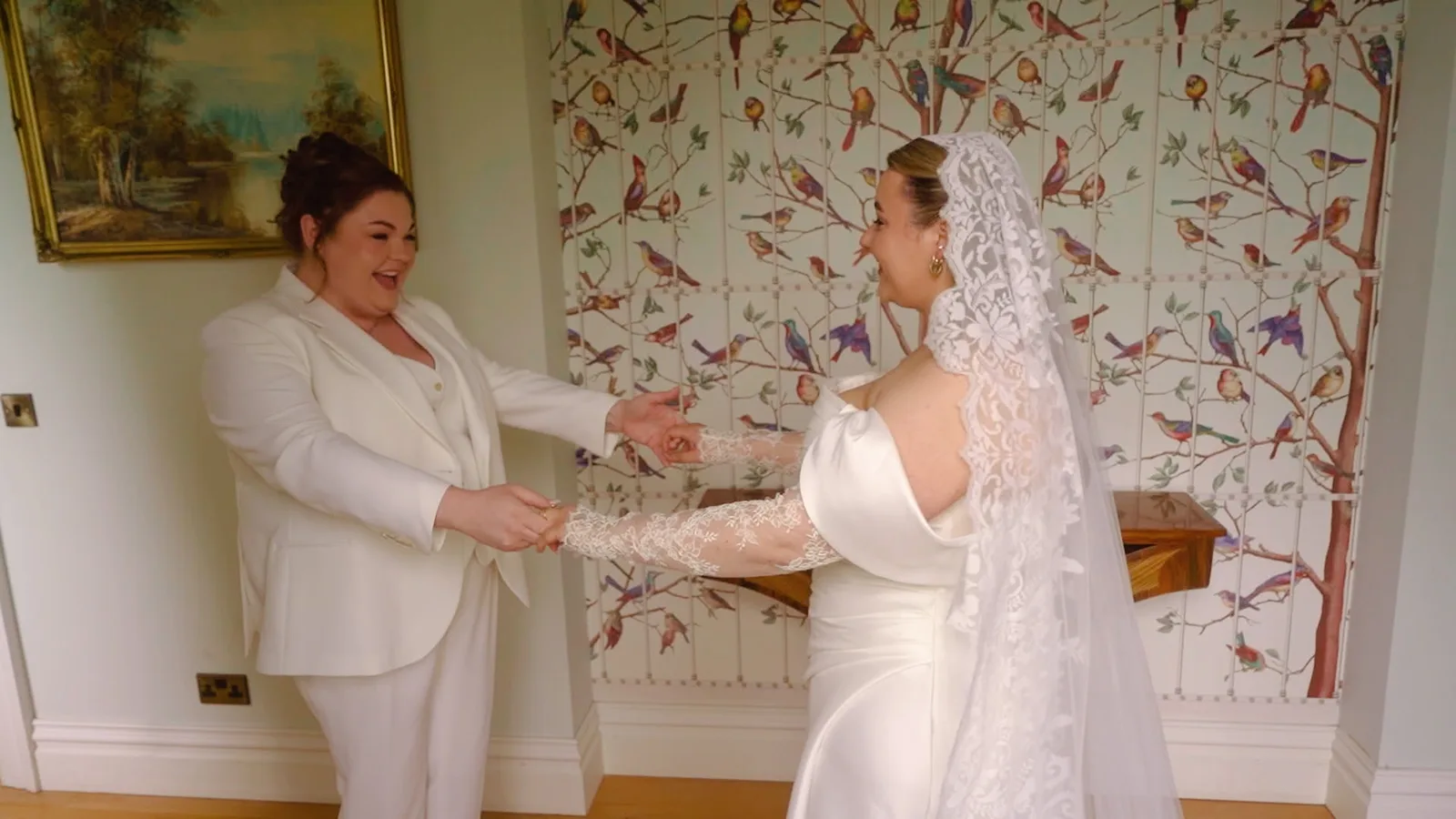
If the idea of being filmed at your own wedding makes you wince, you're not an awkward exception. You're actually most of the couples who get in touch with me. Plenty of enquiries start with some version of "we really hate being on camera, is this even for us?"
The short answer: yes, wedding video can still feel natural, but it depends almost entirely on the videographer, how they work, not on the two of you somehow becoming confident on camera for one day.
A documentary approach films the day that's already happening. Nobody asks you to perform, redo a moment, or gaze at each other on cue. If that's the kind of filming you're picturing, that's the thing to avoid, not video itself.
DISCLAIMER: I've filmed weddings across Ireland for well over a decade, working alone with compact equipment, and being low-key is the whole way I work. So this is a fair warning that I'm not neutral here. But I'll be straight with you about what discreet filming actually looks like, including the bits where you will still know I'm there.
What "discreet documentary" means in practice
It's easy for any videographer to say "natural" and "unobtrusive" on their website. And honestly, I can tell you for a fact that many videographers will actually say those words, but on the day, they're not in any way discreet or natural. Sadly true. But, it must be said, this is only some, not all videographers.
Here's what it means when it's real:
Nothing is staged. I don't set up scenes, direct you, or ask anyone to do something again for the camera. On rare occasions, a couple might actually say to me, what will we do next, and I'll always guide them towards something that I know won't make them uncomfortable. This only comes from experience. If a moment happens, it's in the film. If it doesn't, it isn't.
Nobody speaks to the camera. There are no interviews, no messages to camera, no "say a few words for the video" unless you specifically want that. (I don't even like doing it myself!) Most camera-shy couples emphatically don't, and that's fine.
The equipment stays small. No massive lighting rigs, no camera on a crane over the dance floor, no one crawling on knees in the aisle. One person, compact kit, positioned out of the way.
You don't get directed twice. Your photographer will guide the couple and family photos, because that's their job and they're good at it. I film around your photographer's session rather than running a second one, so there's no separate round of posing for video. For a camera-shy couple that matters more than almost anything else: the photo session is the only "produced" part of the day, and it only happens once.
If you want the longer version of how the day runs, it's on how I work on the day.
The parts of the day people worry about
When couples say they hate being on camera, they're usually picturing a few specific moments. Worth going through them honestly.
The morning
This is the bit where a camera in the room feels most noticeable, because it's just you, your closest people, and me. I keep morning coverage to the final touches, in one location, and I'm not asking anyone to do anything. In my experience the first while feels a bit self-conscious, and then the conversation in the room takes over. I won't promise you'll forget the camera entirely, because that would be overpromising. But there's no lens in your face and no running commentary.
The ceremony
By the time you're standing at the top of the room, the camera is honestly the last thing on your mind. Your attention is on each other and on the celebrant, and I'm working quietly from the back or the side. In Irish churches especially, where the priest may have rules about where a videographer can stand, staying still and staying back isn't just politeness, it's the job.
The speeches
Everyone in the room is looking at the speaker, not at you and definitely not at me. Speeches film themselves. They're also, for a lot of couples getting married in Ireland, the single best reason to have video at all: you get them back in full, in the actual voices.
The dance floor
Dark room, loud band, everyone's attention on the floor. Nobody has ever felt self-conscious about a videographer during Rock the Boat! (Yes, some bands still play that for the craic!)
The honest bit: you'll still know I'm there sometimes
Any videographer who promises you'll completely forget they exist is overselling. There are moments when I'll be nearby: walking down the aisle, cutting the cake, the first dance. What a discreet videographer actually offers is judgement, knowing when to be close for a few seconds and when to disappear to the back of the room. The measure of it is afterwards: couples often tell me that guests barely noticed there was a videographer at all, and that's the reaction to look for in what couples say afterwards about any videographer you're considering.
How to judge whether a videographer is genuinely discreet
Whoever you book, camera-shy or not, three checks tell you most of what you need to know:
-
Watch a full wedding film, not just a highlights reel. Highlights hide everything. In a full film you can see whether people look relaxed, whether anyone is glancing at the lens, and whether moments feel directed. If a videographer won't show you a full film upon request, that's your answer.
-
Read the reviews for the right words. You're looking for "didn't notice", "discreet", "blended in", "guests never realised". Reviews that only praise the editing tell you about the film, not about the day.
-
Ask how they handle the couple session. If the answer involves a second shoot for video, prompts, or "just act natural" scenarios, a camera-shy couple will feel it. The answer you want is some version of "I work around the photographer".
You can see whether my own films pass those tests in my recent wedding films, and the photographers I work alongside will tell you the same about how the day feels.
Common questions from camera-shy couples
Will we have to speak to the camera at any point? No. No interviews, no pieces to camera, nothing. The film is made from real moments and real audio from the day.
Do you direct or pose us at all? No. 99% of the time. The only guided part of your day is your photographer's session, and I film around that rather than adding to it. The 1% is when perhaps a photographer I'm working with may not be that experienced and will turn to me, or the couple may turn to me, and ask what will we do next? My answer is always a judgement call, what does this particular couple actually want? I'd only ever throw a gentle suggestion out to break any potential awkwardness because nobody wants to feel awkward on their wedding day.
What about our guests? Some of them hate cameras too. Guests get the same treatment: nobody is pulled aside or asked to perform. In a documentary film, guests are laughing at the speeches and dancing, not posing.
Can we see a full film before booking, not just highlights? Yes, and you should ask that of anyone you're considering. Get in touch and I'll send one over.
If this sounds like your kind of filming
The couples who worry most about being on camera are usually the ones who end up happiest they booked video, because the film gives them a day they were too busy living to watch. If you'd like to talk it through, or just want to see whether your date is free, check your wedding date. No pressure, no hard sell.
Still deciding whether to have video at all? Here's my honest take on whether you need a videographer if you already have a photographer.