
Should We Ask for Raw Footage From Our Wedding Videographer?
Do wedding videographers give you the raw footage? An honest answer from an Irish videographer on why I don't offer it, and what you get instead.
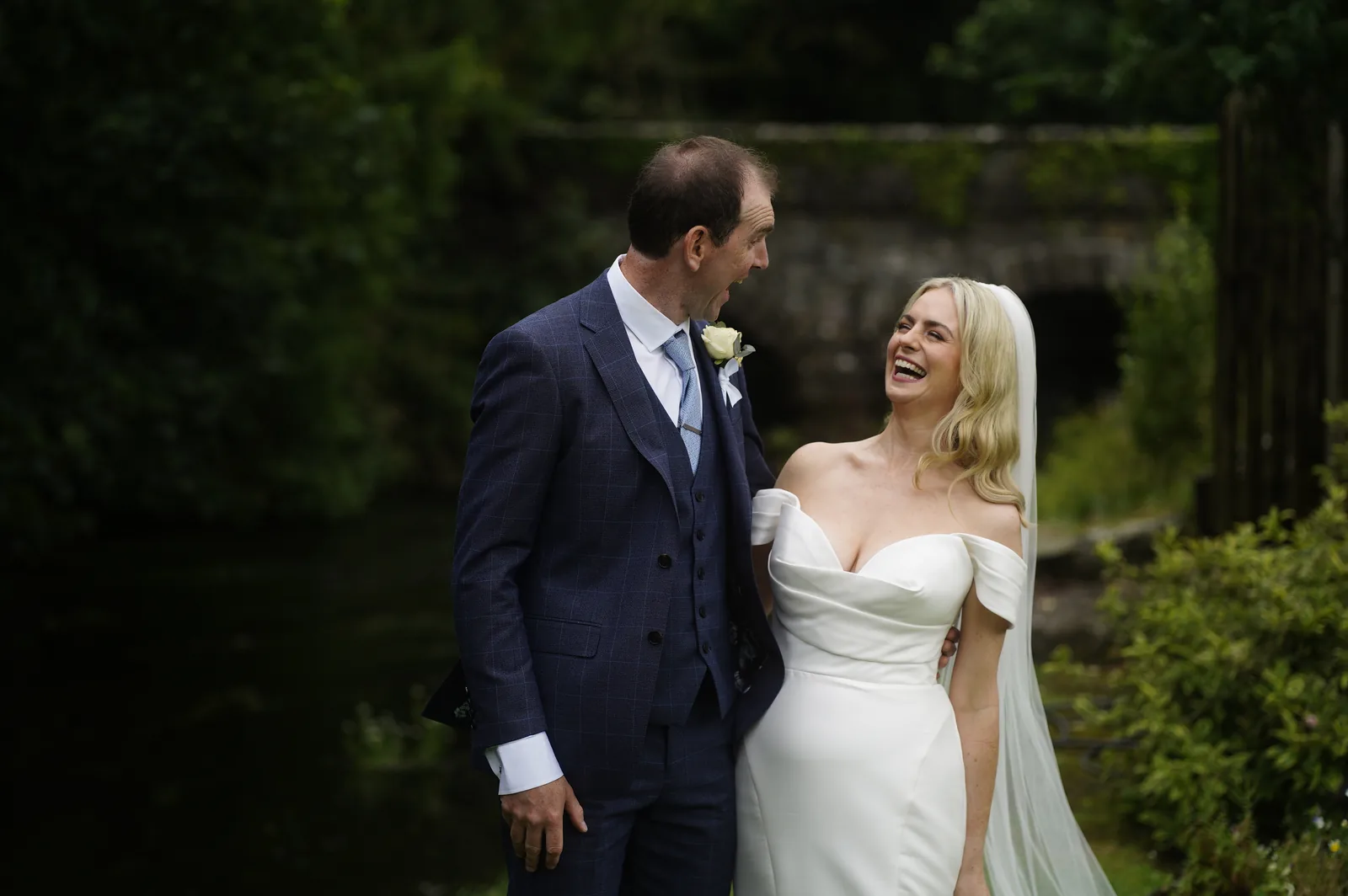
Should you ask your wedding videographer for the raw footage? It's a fair question, and it usually comes from a good instinct: you want everything from your day, not just the bits someone else chose.
The short answer, for me: I don't offer raw footage. That's not a policy dressed up to sound better than it is, so let me explain why, because the reason actually matters more than the answer.
I've filmed weddings across Ireland for well over a decade, so here's what raw footage actually is, why I work the way I do, and what you get instead.
What "raw footage" actually means
Raw footage is everything the cameras recorded, before any editing. It sounds like "the full, unfiltered day." In practice it's a lot less watchable than that, because it's the working material, not a film.
Here's what's actually in it:
Every camera start and stop. A videographer starts and stops recording constantly through the day, repositioning, changing angle, waiting for a moment. Raw footage includes all the dead air in between: the walk across a room, the ten seconds pointed at the floor while moving, the false starts.
Shaky and in-between moments. The clips that were never meant to be seen, filmed while moving into position or checking a shot.
Audio that hasn't been mixed. This is a big one. On the day, sound is often recorded on separate devices: a recorder near the celebrant, another for the speeches, the camera's own microphone. In the edit, those get synced and balanced so you hear things clearly. Raw, they arrive as separate files that don't line up on their own, and the on-camera sound alone is often thin or distant.
Colour before grading. Footage straight off a camera looks flat and a bit lifeless. The richness you see in a finished film comes from colour work afterwards.
Long, repetitive, or unusable stretches. Multiple takes of the same moment, a speech filmed from one fixed angle for twenty minutes, footage that didn't come off. The edit's job is partly to throw the weaker version away and keep the best one.
Why I don't offer raw footage
Here's the honest version. I don't film with a camera running constantly in the background hoping something usable turns up later. I work out where I need to be for each part of your day, and I film that, deliberately, the same discreet way I always work. There isn't a big stash of extra footage sitting on a drive behind the finished film, waiting to be handed over if you ask nicely or pay a bit more.
What doesn't make the final film is almost always exactly what you'd expect: the walk into position, a few seconds pointed at the ground while I move, the odd accidental shot of my own shoes. None of it is footage anyone would want to sit through, and none of it is being kept back from you. It's not usable, it's not interesting, and it genuinely doesn't go anywhere.
So when I say I don't offer raw footage, it isn't "ask and maybe" or "for an extra fee." It's a straightforward no, and I'd rather tell you that plainly than leave it as one of those vague industry questions where you get a different answer from every videographer you ask.
Why the finished film is what you actually wanted anyway
When couples picture raw footage, they're usually picturing "the whole ceremony," "all of the speeches," "the bits the highlights left out." Here's the thing: the finished film already gives you that.
I deliver a full-length documentary film alongside the short highlights, and that longer film is where the substance lives: the ceremony and the speeches in full, the real moments of the day, with the audio actually balanced so you can hear them, and the picture graded so it looks like your wedding rather than a flat camera file. Everything people hope to rescue by asking for raw footage is already there, in a version you'll actually sit down and watch. You can see what's included in what you receive.
That's the honest point, not a sales line: the full edit is more useful to you than a hard drive of raw clips would ever be, because it's the day, watchable.
The practical side: file sizes and delivery
There's a logistics reality too, worth knowing even though it isn't the reason behind my own policy. Raw wedding footage is enormous, often many times the size of the finished films, because it's uncompressed working material with nothing trimmed. That means big drives, long transfers, and files in formats that not every laptop will even play smoothly. "Just send us everything" is a bigger ask than it sounds, for any videographer.
If it still matters to you
None of this means wanting raw footage is unreasonable. Some couples want a long-term archive of absolutely everything, or have a specific plan for the files down the line. If that's you, it's worth knowing that policies vary a lot between videographers: some include it, some offer it on request or for a fee, and some, like me, don't offer it at all. There's no single industry standard, so ask whoever you're considering directly and early, before booking. It's one of the questions worth asking before you book.
Common questions
Is raw footage the same as the full wedding video? No. Raw footage is the unedited working material. The full documentary film is the edited long-form version, with the ceremony and speeches in full, balanced audio and graded colour. The second one is the thing you'll watch. You won't be missing anything by getting the full length documentary style wedding video that I'll provide as standard.
Why can't we just get everything the camera recorded? In my case, because there isn't a stash of extra footage to hand over. I only film what's needed for the finished documentary, so what's left over is a handful of unusable seconds, not a hidden version of the day.
Do you offer raw footage for an extra fee? No. I don't offer it at any price. The full documentary film is the deliverable, and it's built to give you everything that matters from the day.
Will the highlights film leave out important moments? That's exactly what the full-length documentary film is for. If you want the ceremony and speeches in full, that's where they are.
If you'd rather talk it through
If raw footage is on your mind because you want to be sure nothing important gets lost, that's a good instinct, and it's worth a straight conversation. Check your wedding date and ask me anything about what you'd receive. I'd always rather you understood exactly what you're getting than assumed.